/custom html
The BMW E46 M3 is one of the best “feel” cars you can take to a track day—but it’s also old enough that track use can expose weak points fast. The goal for your first few events isn’t lap records. It’s finishing every session with a happy S54 and a brake pedal that stays firm.
This guide is a reliability-first checklist for preparing an E46 M3 for a typical HPDE/track day.
1) Baseline: Is the Car Healthy Enough for Track Use?
Before you buy parts, make sure the car is fundamentally sound.
Quick baseline checks (street driving):
- No overheating, no coolant smell, no mystery coolant loss
- No brake pedal sink, no steering shimmy under braking
- No clunks from the rear over bumps (subframe/bushings can be suspects)
- No check-engine lights you’re ignoring
- Fluids not ancient / unknown
If maintenance history is a question mark, assume everything is due and prep accordingly.
2) Brakes: Your #1 Track-Day System
On an E46 M3, brakes are the first thing most novices overwhelm. The fix is simple: pads + fluid + inspection.
Brake pads (track-capable)
Street pads will fade fast. Pick a known heat-capable pad and arrive with plenty of thickness.
Tip: If you daily the car, either choose a mild dual-purpose pad or swap pads at the track.
Brake fluid (mandatory)
Flush in fresh high-temp brake fluid. Old fluid boils → long pedal → scary.
Rotors and lines
- Check rotors for cracks and thickness
- Stainless lines can improve pedal feel, but fluid quality matters more
3) Tires: The Cheapest Lap Time (and Biggest Safety Variable)
Tires determine grip, braking distance, and stability.
For a first event:
- Use a quality performance tire with real tread
- Don’t track on old, cracked, or bargain tires
Track-day basics:
- Start with conservative pressures; check hot pressures after each session
- Bring a tire pressure gauge (non-negotiable)
- Inspect shoulders and sidewalls—alignment and pressure show up here immediately
4) Alignment & Suspension: Make It Predictable
You don’t need a perfect suspension build, but you do need predictability.
Minimum viable prep:
- No blown shocks
- No obvious torn bushings
- No loose ball joints/tie rods
- Get a performance alignment if your setup allows it
5) Cooling System: Keep the S54 Out of the Danger Zone
Track heat punishes old cooling components.
Before the track:
- Confirm it holds temp in normal driving
- Inspect for any coolant seepage
- Make sure fans behave normally
- Consider a proactive cooling refresh if history is unknown
Rule: if temps climb, do a cool-down lap and come in. A short session is cheaper than an engine.
6) Fluids: Don’t Show Up With Mystery Juice
High heat cooks old fluids.
Pre-track checklist:
- Engine oil: fresh, correct weight for your climate/usage
- Brake fluid: fresh high-temp fluid (mandatory)
- Power steering: inspect level/condition; leaks here are common and messy
- Diff fluid: if unknown/old, consider changing
- Transmission fluid: not required for a first day, but don’t ignore it long-term
Bring: small top-off kit (oil, funnel, rags, nitrile gloves).
7) Known E46 M3 Weak Points to Respect
A track day doesn’t “break good cars”—neglect does. The E46 M3 has a few famous areas.
Rod bearings (S54)
If yours are overdue or unknown, track use isn’t the time to gamble.
VANOS
If you have odd noises, fault codes, or inconsistent power, address it before you push the car.
Rear subframe / chassis cracking
Hard driving + old bushings + sticky tires can accelerate issues. If you’re planning frequent track use, this deserves real attention.
8) Safety & Tech Inspection: Don’t Get Turned Away
Most events use a simple tech sheet. Common reasons cars fail tech:
- Loose battery (must be tied down)
- Brake lights not working
- Fluid leaks
- Worn tires or low pads
In-cabin:
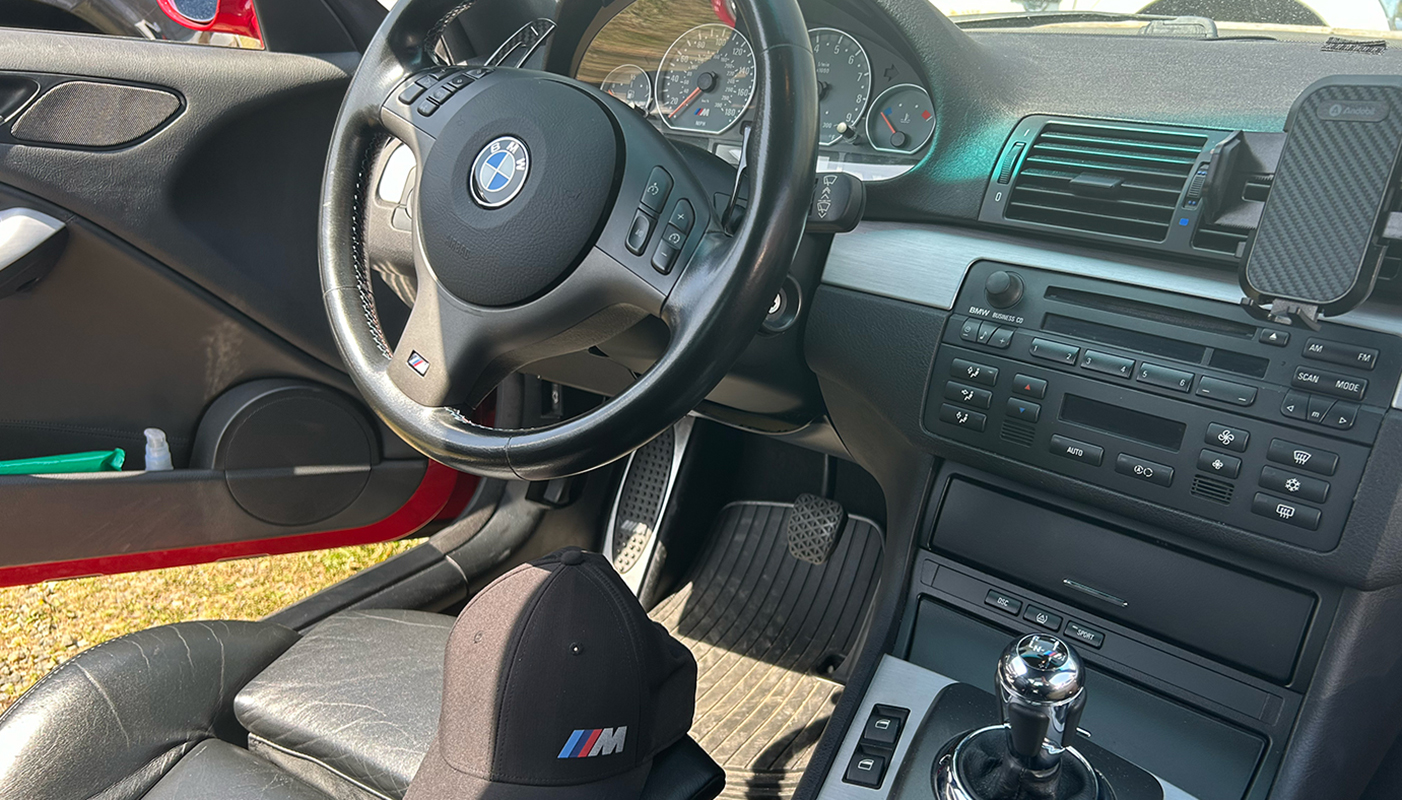
- Remove loose items (often including floor mats)
- Ensure seat belts lock and seats are secure
9) At-the-Track Habits That Save Cars
Prep isn’t only parts—it’s behavior.
- Warm up gently for a lap; don’t go full send immediately
- Do a cool-down lap before coming in
- Don’t set the parking brake immediately after hot sessions
- Check pressures and do a quick under-hood look between sessions
If something feels off, stop and inspect.
10) A Simple “Level 1” Upgrade Path (After Your First Day)
Once you’ve done one event and learned what you actually need:
- Pads matched to your pace
- Dedicated track tires or a second wheel set
- More negative camber (for tire wear and grip)
- Cooling upgrades if you run hot climates
- Brake ducting if you’re cooking pads/rotors regularly
Quick Final Checklist (Print This)
- Brake fluid flushed, brakes inspected
- Track-capable pads with enough thickness
- Tires healthy + pressure gauge packed
- No leaks (oil/coolant/power steering)
- Fluids checked + top-off supplies packed
- Battery secure, lug torque verified
- Cabin/trunk emptied
Want this tailored to your car? Tell me if you’re 6MT or SMG, what pads/tires you’re running, and whether rod bearings + cooling refresh are known/recent.